

James Webb
Founder, LINK Group · your CTO
A fractional CTOwho has run the business, and built the systems.
You get someone senior and technical in the room who looks at all of it - the tech, the systems, the processes, the back ends, the lead generation - and decides what to keep, connect, replace or build. Then builds it.
I'm James Webb. I founded LINK in 2012 and I am the CTO its nine businesses never had to hire, because I built what they run on. This is that seat, for the share of the week your business needs it.
Coming in and looking at everything.
A fractional CTO service is only worth having if the scope is the whole business. Six things, in the order I go through them.
All the tech
Every tool the business pays for, what each one is actually used for, and which ones are doing a job a person could stop doing. The audit most owners have never had because nobody technical has ever sat in their chair.
The systems
How the tools connect - and where the connection is a person re-keying between two screens. Mapped as the business actually runs, not as the process document says.
The processes
Quoting, approvals, onboarding, invoicing, reporting, follow-up. Which steps are decisions and which are just repetition, because only the second kind should be automated.
Business automation →The back ends
The CRM, the job system, the inventory, the data underneath it. Whether the platform you are on fits how you work, and whether what no vendor sells should be built - and owned - instead.
Custom software →The lead generation
What happens in the first hour after an enquiry lands: where it goes, who sees it, what the customer hears back. Usually where the most revenue leaks, and usually unmeasured.
Everything, together
A full-time CTO's job is to hold the whole picture and decide in the right order. That is the seat - the rest of this cluster is the work that comes out of it.
Business transformation →
Not IT support. Not a full-time hire, either.
A virtual CTO, an outsourced CTO and a part-time CTO are the same seat under different names. What it is not is a helpdesk - and what it replaces is not your IT provider.
What the role is for
- Fractional CTO · here
- Deciding what the business should run on, and building it
- IT support / MSP
- Keeping what you have running: devices, email, networks, tickets
- Full-time CTO
- The same as fractional, as a permanent executive
Who you deal with
- Fractional CTO · here
- Me, directly, across every system
- IT support / MSP
- A helpdesk queue and an account manager
- Full-time CTO
- One senior hire, and the search to find them
Builds software?
- Fractional CTO · here
- Yes - integrations, automation and custom systems, owned by you
- IT support / MSP
- No. Installs and supports vendor products
- Full-time CTO
- Sometimes; more often directs a team to
Looks at marketing and lead flow?
- Fractional CTO · here
- Yes. Lead generation is part of the brief
- IT support / MSP
- No
- Full-time CTO
- Rarely
What it costs, roughly
- Fractional CTO · here
- Scoped to the business; a fraction of a full-time executive
- IT support / MSP
- A per-user monthly fee
- Full-time CTO
- A senior executive salary, plus equity, plus the risk of the hire
The finance seat and the technology seat, from one group.
A virtual CFO reads the numbers and makes the pricing, margin and cash decisions. A fractional CTO builds the systems that produce those numbers and stops them being assembled by hand. LINK Advisors provides the first; I provide the second; the two already work together, because it is how LINK runs itself.
Scoped to the business, not sold by the hour.
There is no menu of retainer sizes here, because a business with two systems and one broken process does not need the same seat as one with twelve systems and a rebuild ahead of it. The first conversation is a read of everything you run; the scope and the figure come out of that, in writing, before you commit to anything.
It usually starts as a transformation - the rebuild - and settles into the seat: the person who is still there when the next decision comes up, who knows why the system was built the way it was, and who can tell you to buy the product rather than build it when that is the right call. Anything built along the way is yours outright.
How a transformation runs →What a CTO who builds looks like.
Three platforms, three industries, one builder - my own products and ventures, front end to back end. The public site, the screens behind the login and the engineering facts are all on the custom software page.
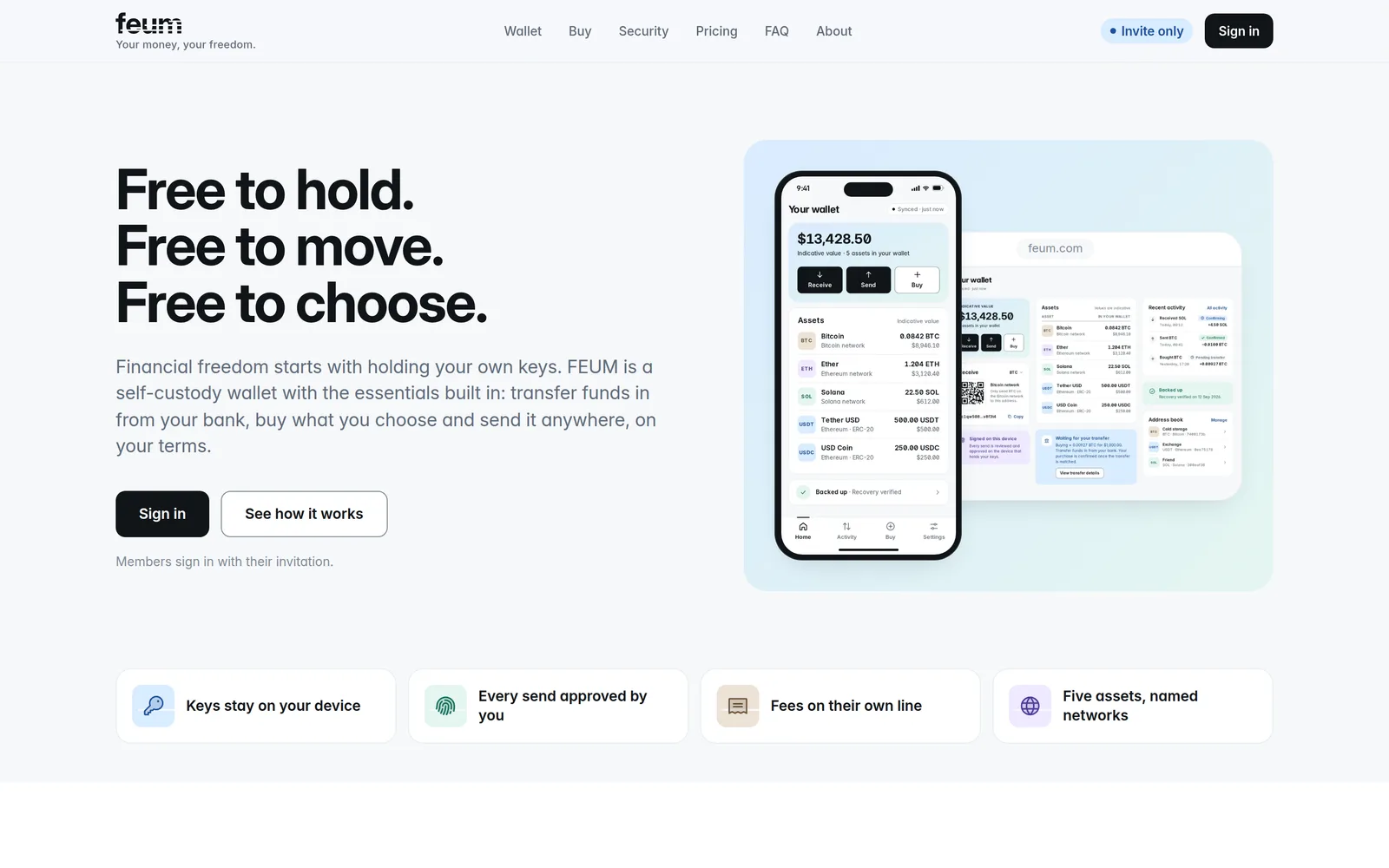
FEUM
FinanceInvite-only · paper modeMember app and owner's Command centre, with every buy and transfer behind an explicit approval and a double-entry ledger underneath.
See the build →
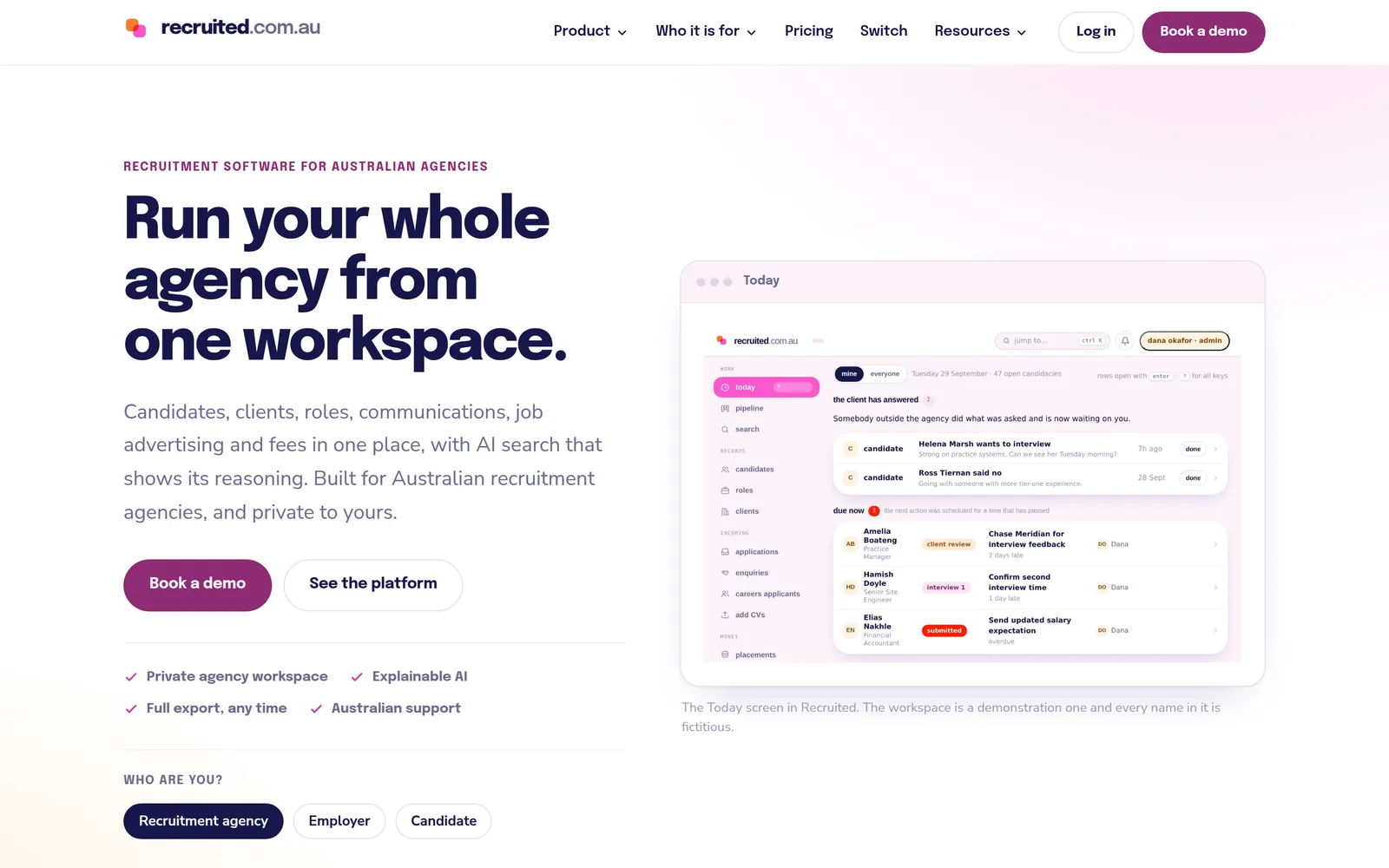
Recruited
RecruitmentLiveCRM and ATS in one workspace for Australian agencies: a Today screen, a pipeline that flags stalled candidates, and search that shows its working.
See the build →
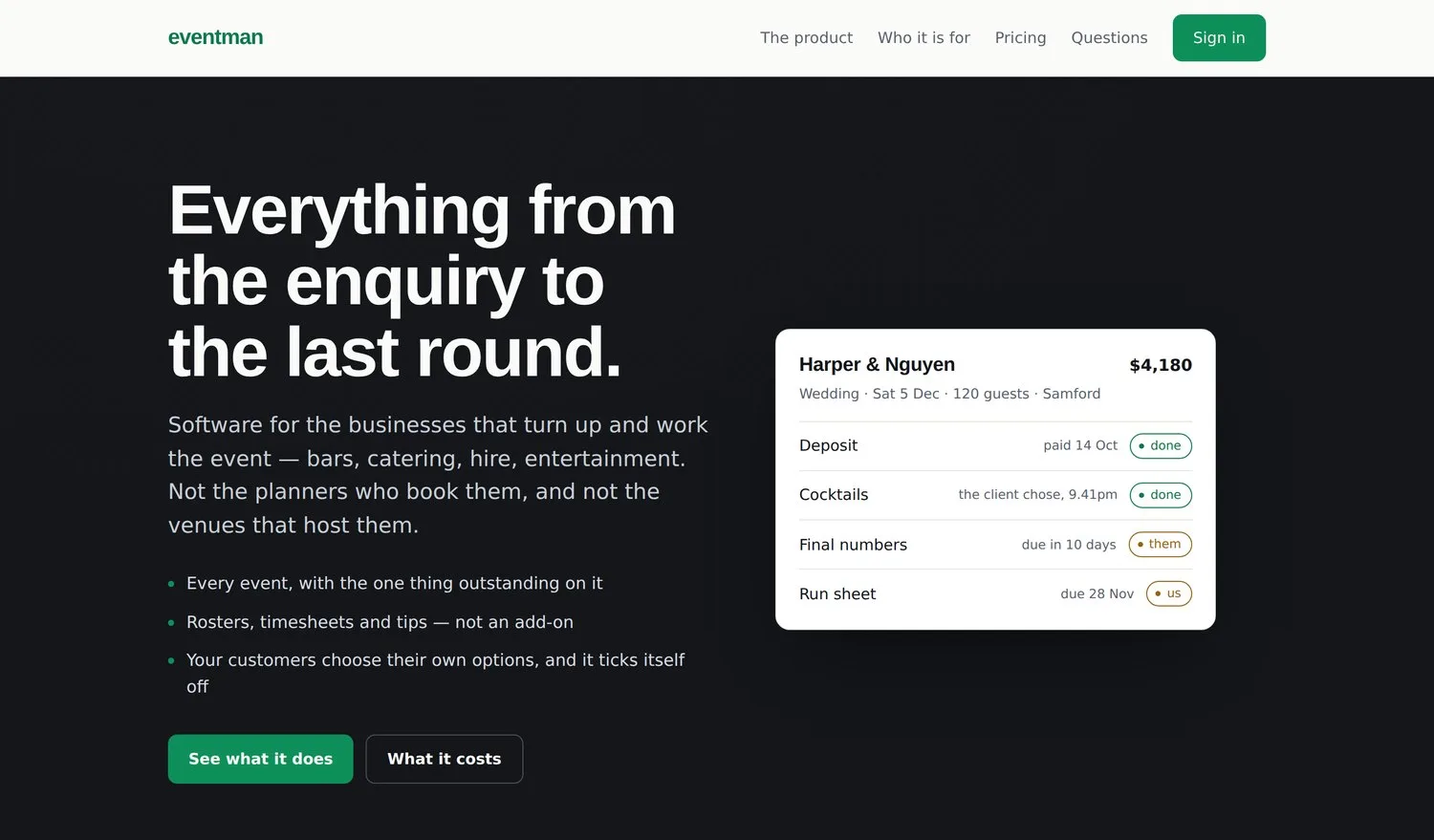
Eventman
EventsPre-launchEnquiry to last round for mobile bars, caterers and hire: an event board, crew and rosters, checklists that re-date themselves, and the money owed.
See the build →
Every capture shows demonstration data. Where a product is not yet live, it says so.
Common questions.
→What does a fractional CTO do?
The job a full-time chief technology officer does, for a business that does not need one full-time: own the whole technology picture, decide what to keep, connect, replace or build, and be accountable for the result. In my version the seat comes with the hands - I look at all the tech, the systems, the processes, the back ends and the lead generation, then I build what is missing myself rather than writing a recommendation for someone else to carry out.
→Fractional CTO vs full-time CTO - what is the real difference?
Time and risk. A full-time CTO is a senior executive salary, a long search, and a bet that one person's skills match the next five years of your business. A fractional CTO is the same seat for the share of the week your business actually needs, scoped to what is in front of it, and it can be stopped without a redundancy. Most businesses under a few hundred people do not have five days a week of CTO decisions to make; they have a backlog of them nobody has made for years.
→Virtual CTO vs fractional CTO - are they the same thing?
Close enough that the words are used interchangeably, with one difference in emphasis. 'Virtual CTO' usually means the role is delivered remotely; 'fractional' means it is part-time. Mine is both: most of the work is remote wherever you are in Australia, and Brisbane clients get in-person sessions where they help. 'CTO as a service', 'outsourced CTO' and 'part-time CTO' are the same engagement under different names.
→When does a small business need a fractional CTO?
When technology decisions are being made by default - by whichever vendor called last, or by whoever on the team was least afraid of the settings page. The signs are familiar: a stack of subscriptions nobody chose on purpose, a person who is the integration between two systems, a platform everyone works around, and an owner who cannot get a straight answer on what any of it should cost. If that is you, it is not a size question; a twelve-person business can need the seat as badly as a hundred-person one.
→What does a fractional CTO cost?
There is no published rate, because the engagement is scoped to the business - a company with two systems and one broken process is a different engagement from one with twelve systems and a rebuild ahead of it. The honest comparison is against a full-time CTO's package and the cost of not having the decisions made at all: the subscriptions that stay, the hours that keep leaking, the platform that gets renewed again. Across LINK's own nine businesses, having the seat filled in-house took about $40,000 a year out of the software bill alone. You get a scope and a figure before you commit.
→Is this IT support or managed IT?
No, and it is worth being plain about. I do not run your helpdesk, manage your devices, or sell you a per-user support plan - that is an IT provider's job and a good one is worth keeping. A CTO decides what the business should run on and makes sure it gets built; an MSP keeps what you already have running. If you have an IT provider, I work alongside them; if you need one, I will tell you.
→What do you bring that a technology consultant does not?
The builds, and the fact that I have been the owner. Most tech consulting ends in a report. I founded LINK in 2012 and grew it into nine businesses across six industries, and I built the CRM, lead management, automation and reporting they run on - replacing around $40,000 a year of subscriptions on the way. Clients have moved off platforms that never fitted them onto systems I built and own outright. That is a different starting point from an engagement that has only ever advised.
→Can the fractional CTO and a virtual CFO work together?
Yes, and they should - it is the pairing most growing businesses are missing. LINK Advisors provides the virtual CFO seat: pricing, margin, cash, the monthly read of the numbers. I provide the technology seat: the systems that produce those numbers and the automation that stops them being assembled by hand. Same group, two people who already work together, one business. It is the arrangement LINK itself runs on.
Tell me what you run and who decides on it today.
This goes straight to me, not a sales team. You'll get a straight read on whether the seat is worth filling - and if what you need is an IT provider or a single fix, that is what you'll hear.