
Business transformation,a complex process made easy with experience.
Your front end, your back end, your marketing, your systems, your processes, your lead generation. Not one at a time by six different vendors - all of it, as one business - then rebuilt so it runs better and makes more.
I'm James Webb. I founded LINK in 2012 and rebuilt it into a nine-business group running on systems I built myself. This is the same work, done for you.

James Webb
Founder, LINK Group
9
LINK businesses, rebuilt onto systems built in-house
6
industries those systems run in
$40k
a year of software subscriptions replaced across the group
$55k
saved in systems cost by one client who moved off simPRO
Eight things I look at, and where each one gets fixed.
Business transformation services usually mean a framework and a deck. This is a list of the parts of your business, in the order I go through them, each one linked to the page or the LINK division that does that work.
01
Front end
The website and everything a customer touches before they pay you. Whether it is found, whether it converts, and whether what it promises is what the back end can deliver.
SEO and search, at LINK Marketing ↗02
Marketing and lead generation
Where leads come from, what each one costs, and what happens in the first hour after one arrives. Usually the part with the most leakage and the least measurement.
Marketing automation, at LINK Marketing ↗03
Back end
The CRM, the job system, the inventory, the quoting - the software the work actually runs on. Where no product fits, it gets built, and you own it.
Custom software →04
Systems
How the tools you already pay for connect, and where a person is the connector. Mapped before anything is bought or built.
Systems review →05
Processes
Quoting, invoicing, approvals, onboarding, follow-ups, reporting - the steps someone repeats by hand every day, which is the work that scales with headcount until it is automated.
Business automation →06
The numbers
Xero joined to the rest of the stack so the question 'how are we going?' has an answer that does not take a day to assemble.
Financial dashboards →07
AI, where it earns its place
Models built for specific jobs inside the system rather than a chatbot bolted to the front - and a straight answer about where AI does not belong yet.
AI consulting →08
Profit
The point of all of it. Once the systems show the margin by job, by service and by month, LINK Advisors' accountants turn that into the decisions that move it.
Increase your profits, at LINK Advisors ↗
How a transformation runs when one person owns it.
The reason most transformation programmes stall is that the person who diagnosed the problem is not the person who builds the fix, and neither of them is still there a year later. Here all three are me.
The ongoing seat: fractional CTO →01
Look at everything
Front end, back end, marketing, systems, processes, lead generation and the numbers - as one business, not as seven vendors' problems. Most of what is wrong is in the joins between them, which is exactly where nobody is looking.
02
Decide what to keep, connect, replace or build
In writing, with the cost of each. Most of the stack stays. Some of it gets connected properly for the first time. A platform that never fitted gets replaced, and the piece no vendor sells - the part specific to how you run - gets built.
03
Rebuild, in the open
A working version early, so you can steer it while it is still cheap to change. The automation runs on real jobs, the dashboard reads real numbers, and the inbox stops being the system of record.
04
Keep the seat
Transformation is not a project with an end date; it is a business that keeps changing with someone technical in the room. That ongoing seat is the fractional CTO engagement.
One transformation, three teams who do that work every day.
Technology and systems · this site
Me, as your CTO
Back end, systems, processes, automation, AI and the dashboard. Scoped, built and handed over by one person, then kept running under a fractional CTO engagement.
Front end and lead generation
LINK Marketing
Search, SEO, content and the marketing automation that follows a lead up - sold as plans, run on tooling built here.
Profit and the finance seat
LINK Advisors
The accountants who read the numbers the systems now produce, and turn them into pricing, margin and cash decisions. The virtual CFO beside the fractional CTO.
Digital transformation for a small business is a smaller job than the phrase suggests.
Digital transformation consulting was priced for enterprises: a programme office, a year of workshops, a platform nobody chose. For an established Brisbane business the work is the same in kind and a fraction of the size - connect what you already pay for, automate the steps a person repeats, replace the one platform that never fitted, and put the numbers where you can see them.
It is also cheaper than it was. The tooling has changed what one experienced builder can ship, which is why LINK's own nine businesses could be rebuilt in-house and why clients get the same approach without an enterprise budget. What you get at the end is yours - the code, the data and the logic - not a licence.
Three platforms I've built, front end to back end.
My own products and ventures, not client work - which is why they are here. You can see the public site, the screens behind the login and the engineering facts before we have spoken.
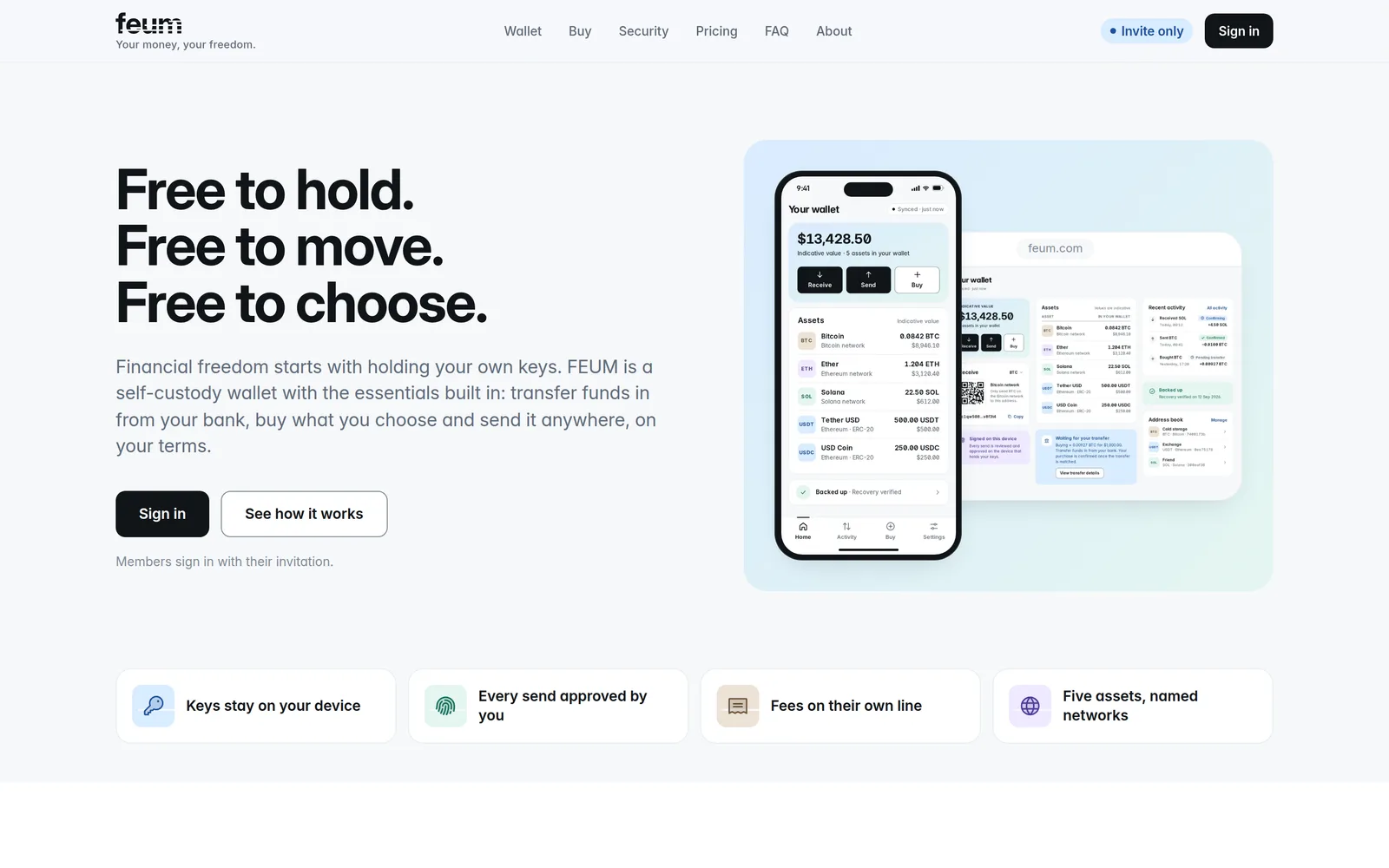
FEUM
FinanceInvite-only · paper modeMember app and owner's Command centre, with every buy and transfer behind an explicit approval and a double-entry ledger underneath.
See the build →
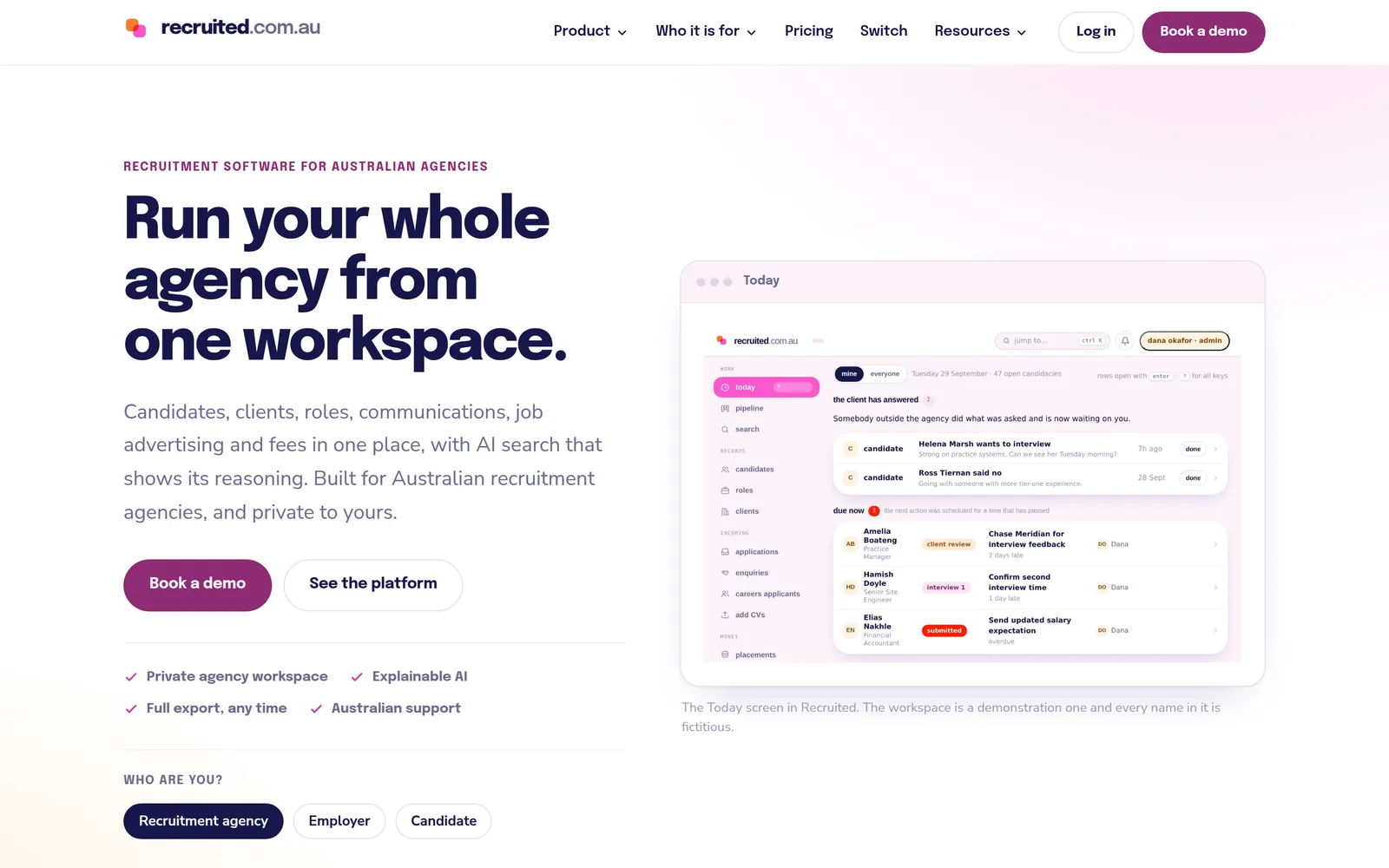
Recruited
RecruitmentLiveCRM and ATS in one workspace for Australian agencies: a Today screen, a pipeline that flags stalled candidates, and search that shows its working.
See the build →
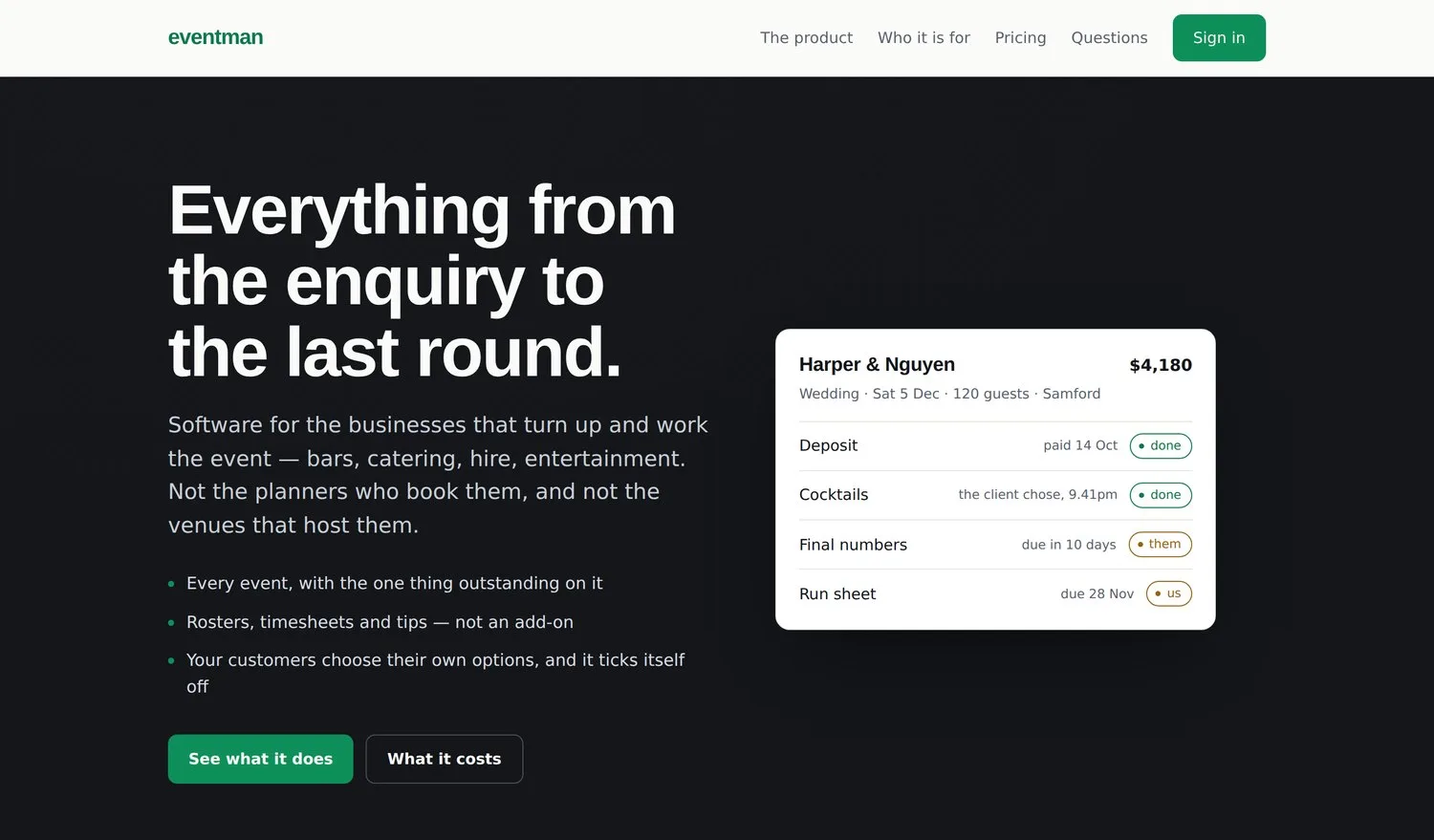
Eventman
EventsPre-launchEnquiry to last round for mobile bars, caterers and hire: an event board, crew and rosters, checklists that re-date themselves, and the money owed.
See the build →
Every capture shows demonstration data. Where a product is not yet live, it says so.
And for clients, the before and the after.
Commercial tiling contractor
Was on simPRO - a capable platform that did a great deal they had no use for and never the things they needed. Now on one custom system for staff, jobs, scheduling and quoting. The saving was the smaller win; the bigger one was the revenue that had been leaking between quote and invoice.
Large online retailer
Out-of-the-box inventory and the standard web integration were the weakest part of the operation. Stock, customers and the storefront now run on one back end instead of three products and the glue between them.
Multi-service online business
The whole operation ran from an inbox. Now CRM, projects and people management on one system, follow-ups on automation, and each person's workload visible - so the same team takes on more work without hiring to cover the admin.
Common questions.
→What is business transformation, in practical terms?
Looking at how a business runs end to end - front end, back end, marketing, systems, processes, lead generation and the numbers - and rebuilding the parts that are holding it back so it runs better and makes more. The enterprise version is a multi-year programme with a steering committee. The version an established small or mid-sized business needs is narrower and faster: find where work leaks, where people are the glue between tools, and where a platform never fitted, then fix those in an order that pays for itself.
→What does a business transformation consultant actually deliver?
Here, two things most consultants do not: the build, and the seat afterwards. The first deliverable is a written read of the whole business with a keep / connect / replace / build decision against each part and what each costs. Then the work gets done - integrations, automation, custom systems, dashboards - by me, not handed to an agency bench. And because a business keeps changing, the ongoing version is a fractional CTO engagement rather than a report you file.
→Is this the same as digital transformation?
Mostly, and the difference is in what gets measured. Digital transformation describes moving work onto better technology. Business transformation is the reason you would: the business should be easier to run and more profitable afterwards. Technology is nearly always the lever, so a digital transformation consultant and a business transformation consultant do similar work - but if the engagement ends with new software and the same margin, only the first half happened.
→Where do you start?
With whichever part is costing you most, which is rarely the one you called about. A business that asks for a new website often needs its lead follow-up fixed first; one that asks for automation often needs two systems connected before anything can be automated. The first conversation is a read of the whole thing, and the order comes from that - not from what I happen to sell.
→Do you do the marketing and the accounting side as well?
Not personally, and that is the point of doing this inside a group. The technology and systems work is mine. The marketing - SEO, search, campaigns, marketing automation - is LINK Marketing's, and the profit and finance seat - pricing, margin, cash, a virtual CFO reading the numbers monthly - is LINK Advisors'. One transformation, with each part done by the people who do that work every day, rather than one consultant stretching across all three.
→How is this different from hiring an agency or a dev shop?
An agency sells you the thing it makes. A dev shop will build what you specify. Neither will tell you that the real problem is in a different part of the business, because that is not what they are paid for. The whole-business read comes first here, and the recommendation is as likely to be 'connect what you have and buy one product' as it is to be a build. When a build is right, I do it myself and you own it outright.
→What size of business is this for?
Established businesses with a real operation - staff, customers, a stack of software that has grown by accident - where the owner can feel the drag but cannot see where it is. A small business digital transformation is often a better investment than a large one, because the leaks are a bigger share of the margin and the fix is a smaller job. If you are pre-revenue, this is not the right page yet.
→Where are you, and does it matter?
Fortitude Valley, Brisbane. Most of this work happens remotely, so clients are anywhere in Australia; Brisbane businesses get in-person sessions for the mapping, which is where they help most.
Tell me how the business runs today and where it drags.
This goes straight to me. You'll get a read of the whole business and the order I would fix it in - including the parts that belong with LINK Marketing or LINK Advisors rather than with me.